- Home to LMIC
- Virtual Labor Market Data System
- Career Exploration & Planning
- Consumer Price Index
- Demographics
- Economic Snapshot
- Employee Benefits
- Employment Projections
- Labor Force & Unemployment
- Labor Supply
- Overview of the Current Labor Market
- Surveys We Conduct
- Wages & Income
- Workers by Industry
- Tools & Resources
- Publications
- References
- What's New
- Can't Find It?
Labor Market Information Center
2025 Annual Report
Quarterly Census of Employment and Wages
Trade, Transportation and Utilities Supersector
The Trade, Transportation and Utilities supersector is comprised of the Wholesale Trade sector, the Retail Trade sector, the Transportation and Warehousing sector and the Utilities sector. Businesses within this supersector sell or arrange the sale of goods and supplies and retail merchandise to the public, provide transportation of passengers or cargo or generate and/or distribute electricity, gas or water.
| South Dakota Covered Workers and Pay 2025 |
|||
| Supersector, Sector and Subsector | Number of Establishments | Average Number of Workers | Annual Pay |
| Trade, Transportation and Utilities | 9,011 | 91,886 | $54,180 |
| Wholesale Trade | 3,352 | 22,331 | $85,909 |
| Merchant Wholesalers, Durable Goods | 1,788 | 11,413 | $91,628 |
| Merchant Wholesalers, Nondurable Goods | 1,406 | 10,534 | $77,802 |
| Wholesale Trade Agents and Brokers | 158 | 384 | $138,322 |
| Retail Trade | 3,962 | 53,919 | $38,525 |
| Motor Vehicle and Parts Dealers | 562 | 8,145 | $62,871 |
| Building Material and Garden Equipment and Supplies Dealers | 400 | 5,945 | $45,326 |
| Food and Beverage Retailers | 380 | 8,666 | $26,792 |
| Furniture, Home Furnishings, Electronics, and Appliance Retailers | 321 | 2,527 | $55,456 |
| General Merchandise Retailers | 280 | 10,308 | $32,650 |
| Health and Personal Care Retailers | 252 | 2,111 | $41,342 |
| Gasoline Stations and Fuel Dealers | 660 | 7,661 | $30,272 |
| Clothing, Clothing Accessories, Shoe, and Jewelry Retailers | 377 | 2,572 | $24,956 |
| Sporting Goods, Hobby, Musical Instrument, Book, and Miscellaneous Retailers | 730 | 5,985 | $33,989 |
| Transportation and Warehousing | 1,518 | 13,547 | $55,282 |
| Air Transportation | 33 | 76 | $103,036 |
| Truck Transportation | 1,047 | 4,717 | $64,428 |
| Transit and Ground Passenger Transportation | 82 | 1,322 | $29,287 |
| Pipeline Transportation | 13 | 121 | $131,030 |
| Scenic and Sightseeing Transportation | 14 | 107 | $32,171 |
| Support Activities for Transportation | 183 | 1,279 | $63,492 |
| Postal Service | 7 | 29 | $24,748 |
| Couriers and Messengers | 93 | 2,628 | $50,319 |
| Warehousing and Storage | 46 | 3,269 | $50,471 |
| Utilities | 179 | 2,089 | $111,948 |
| Utilities | 179 | 2,089 | $111,948 |
| Totals may not add due to rounding. Data subject to revision. Produced by the Labor Market Information Center, South Dakota Department of Labor and Regulation, in cooperation with the U.S. Bureau of Labor Statistics. |
|||
Wholesale Trade
NAICS Sector 42
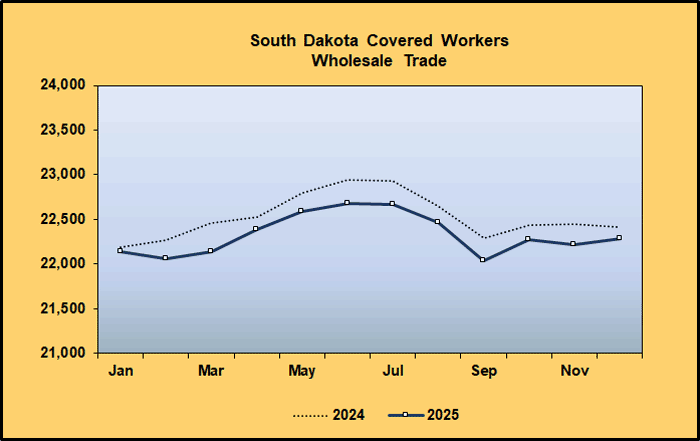
After four consecutive years of growth, Wholesale Trade worker levels had a regression. Wholesale Trade lost 201 workers (0.9%), leveling at 22,331 workers in 2025. Wholesale Trade is influenced by many factors, including technological advancements like increased automation, economic growth, and supply chains (nationally and worldwide). The average annual wage increased 3.8%, reaching $85,909 in 2025. The Wholesale Trade sector ranked sixth in annual pay and seventh in worker levels among all sectors in 2025.
The Wholesale Trade sector consists of establishments engaged in wholesaling merchandise and rendering services incidental to the sale of merchandise. The merchandise described in this sector includes the outputs of agriculture, mining, manufacturing, and certain information industries, such as publishing. The wholesaling process is an intermediate step in the distribution of merchandise, as they sell merchandise to other businesses and normally operate from a warehouse or office. These warehouses and offices are distinguished by having little or no display of merchandise. In addition, neither the design nor the location is intended to solicit walk-in traffic.
Merchant Wholesalers, Durable Goods (NAICS 423) experienced a loss in the number of workers, decreasing by 39 workers (0.3%). The average annual pay is now $91,628, increasing $2,778 (3.1%). Durable goods are new or used items that have a normal life expectancy of three years or more. Examples include construction equipment, farm machinery, furniture, computer equipment, jewelry, and household appliances. The following four industry groups within the Durable Goods subsector of Merchant Wholesalers experienced declines in workers from 2024 to 2025:
- Furniture and Home Furnishing Merchant Wholesalers (NAICS 4232)
- Lumber and Other Construction Materials Merchant Wholesalers (NAICS 4233)
- Hardware, Plumbing and Heating Equipment and Supplies Merchant Wholesalers (NAICS 4237)
- Machinery, Equipment, and Supplies Merchant Wholesalers (NAICS 4238)
These next three industry groups within the Durable Goods subsector of Merchant Wholesalers experienced positive worker growth in 2025.
- Professional and Commercial Equipment and Supplies Merchant Wholesalers (NAICS 4234)
- Household Appliances and Electrical and Electronic Goods Merchant Wholesalers (NAICS 4236)
- Miscellaneous Durable Goods Merchant Wholesalers (NAICS 4239)
The Nondurable Goods Merchant Wholesalers (NAICS 424) workforce lost 96 workers (0.9%) in 2025. The annual pay increased $3,152 (4.2%), reaching a 2025 average annual wage of $77,802. Establishments in this industry sell nondurable goods to other businesses. Nondurable goods generally have a normal life expectancy of less than three years. They include paper and paper products, farm products, drugs, petroleum, groceries, apparel, newspapers, flowers, and tobacco products. Some of the worker level losses within the Nondurable Goods Merchant Wholesaler group took place in Miscellaneous Nondurable Goods Merchant Wholesalers (NAICS 4249) and Farm Product Raw Material Merchant Wholesalers (4245). To help offset some worker loss, there were employment gains in Petroleum and Petroleum Products Merchant Wholesalers (NAICS 4247). Gasoline and fuel oil merchant wholesalers are illustrative examples. These establishments purchase bulk fuel and lubricants from refineries and sell them to retailers, commercial fleets, and industrial operators. They act as a vital link in the supply chain as they distribute gasoline, diesel, fuel oil, and greases.
The remaining subsector group in this industry is the Wholesale Trade Agents and Brokers subsector (NAICS 425). This subsector’s workforce receded, declining by 66 workers (14.7%) in 2025. The average annual pay increased $18,664 (15.6%) from 2024 to 2025. This subsector has the highest annual pay out of the three subsectors with a 2025 annual wage of $138,322. The pay structure is usually salaried with distribution of bonuses and profits, resulting in some years of elevated pay. Brokers and agents in this subsector arrange for the sale of goods owned by others, generally on a fee or commission basis. They act on behalf of buyers or sellers of goods to facilitate wholesale trade. Agents and brokers for all durable and nondurable goods are included in this industry.
Retail Trade
NAICS Sectors 44-45
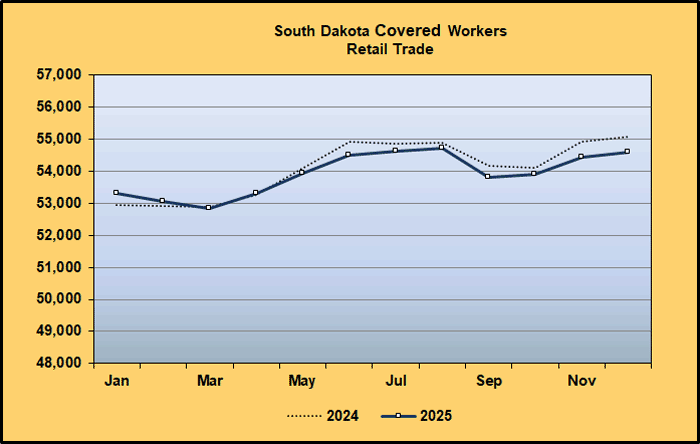
After trending upward four consecutive years, worker levels in Retail Trade declined in 2025. This sector lost 168 workers (0.3%). Annual pay increased $936 (2.5%), reaching an annual average of $38,525. Retail Trade is ranked third out of all sectors in the number of establishments (3,962) and second in employment (53,919 workers). Retail Trade establishments employ many part-time workers, with many arranging their schedules around school, family responsibilities, or another job. Six out of the nine subsectors had worker losses, and seven subsectors had growth in annual pay from 2024 to 2025.
Increased consumer demand and population growth can impact worker levels in Retail Trade. Many establishments have increased their social media presence to increase consumer demand. When consumer spending increases, the demand for retail goods also grows, leading to more jobs in this sector. Increased demand also comes from population growth as establishments expand their footprint to meet the growing needs of the community. However, in 2025, declines in retail trade were driven in part by changes in the consumer landscape, where inflation and tariff turbulence squeezed middle income households. Consumers struggled with the rising cost of living, leading to tightening budgets and delayed purchases. Additionally, a rise in e-commerce continued to shift consumers habits toward online shopping for the best deals, bypassing traditional brick and mortar stores.
General Merchandise Retailers (NAICS 455) added the largest number of workers with the addition of 355 workers (3.6%) from 2024 to 2025. With a total of 10,308 workers in 2025, the General Merchandise Retailers subsector accounted for 19.1% of the workforce in Retail Trade in 2025. The average annual pay increased $1,638 (5.3%). Department stores, supercenters, dollar stores, variety stores, and general stores are the type of establishments included in this subsector. These businesses retail general lines of new and used merchandise with some offering online or auction sites for purchasing options.
Worker levels in Sporting Goods, Hobby, Musical Instrument, Book, and Miscellaneous Retailers (NAICS 459) rose 1.2% with the addition of 69 workers, finishing 2025 at 5,985. The average annual pay increased $1,086 (3.3%), vaulting to an average annual pay of $33,989. Industries in this subsector are involved in retailing sporting equipment, musical instruments, and other products for specific leisure activities. Sewing supply stores, sporting goods retailers, florists, bookstores, hobby shops, pet supply stores, and toy stores are examples of establishments included in this subsector. Used merchandise retailers provided additional growth in this subsector.
Gasoline Stations and Fuel Dealers (NAICS 457) gained 28 workers (0.4%). The average annual pay increased 2.5%, increasing to $742. Gasoline service stations, truck stops, and gasoline stations with convenience stores are examples of establishments included in this subsector. Establishments in this subsector may also provide automotive repair services. This industry, dominated by single store operators, is an essential part of South Dakota retail. Many locations have been shifting toward enhanced food service, digital technology, and high-quality fresh food options while continuing to sell fuel as their primary product.
Motor Vehicle and Parts Dealers (NAICS 441) suffered a loss of 191 workers (2.3%). Declines in this subsector may be related to drops in demand due to shifts in consumer spending on higher priced items because of economic uncertainty. Weakening employment was also impacted by industry-wide tariff indecision and elevating interest rates, which both impacted consumer affordability and caused a general softening of the market. Despite regressions in employment, the average annual pay gained $1,478 (2.4%). Establishments included in this subsector are new and used vehicle dealerships, recreational vehicle dealers, and motorcycle and boat entities. The shift toward online car shopping may lead some businesses to streamline their sales teams or prioritize clearing of older inventory over expanding new workforces. Helping counterbalance some worker losses, some gains in workers were felt within automotive parts and accessories retailers, which sell new or used parts and accessories; some also provide installation expertise.
Furniture, Home Furnishings, Electronics, and Appliance Retailers (NAICS 449) had losses of 87 workers (3.3%). Declines in this subsector may be related to drops in demand due to shifts in consumer spending on higher priced items because of economic uncertainty. Despite declines in employment, the average annual pay increased $2,255 (4.2%), reaching $55,456. Establishments included in this subsector are furniture retailers, floor covering stores, appliance stores, home furnishings stores, computer equipment stores, and window treatment stores.
Transportation and Warehousing
NAICS Sectors 48-49
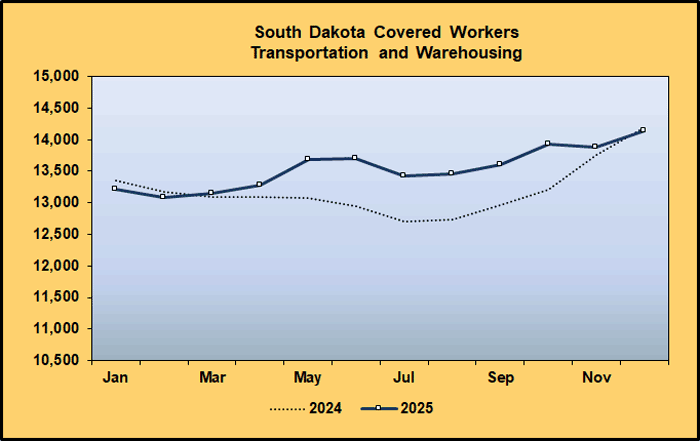
The Transportation and Warehousing sector increased by 355 workers (2.7%) to 13,547 in 2025. This is the fifth consecutive year of gains. This sector includes establishments that provide passenger and cargo transportation, warehousing and storage for goods, scenic and sightseeing transportation, postal services, courier services, and support activities for transportation. It is common for a business in this sector to operate a network of facilities, workers, and equipment over a widespread area.
There were five subsectors that showed employment gain and three subsectors that showed employment loss in 2025.
Subsectors with increased worker levels listed in order of actual worker gain:
- Warehousing and Storage (NAICS 493): 226 workers (7.4%)
- Couriers and Messengers (NAICS 492): 155 workers (6.3%)
- Support Activities for Transportation (NAICS 488): 83 workers (6.9%)
- Transit and Ground Passenger Transportation (NAICS 485): 38 workers (3.0%)
- Postal Service (NAICS 491): 2 workers (7.4%)
Subsectors with decreased worker levels listed in order of actual worker loss:
- Truck Transportation (NAICS 484): -132 workers (2.7%)
- Pipeline Transportation (NAICS 486): -15 workers (11.0%)
- Air Transportation (NAICS 481): -2 workers (2.6%)
The Warehousing and Storage subsector had the largest increase in workers in this sector, reaching 3,269 total workers in 2025. Establishments in this subsector include refrigerated warehousing, grain elevator storage, lumber storage terminals, bulk petroleum storage, and general warehousing. Gains are a result of establishments expanding their workforce to meet demand. When demand for products rises, the need for additional workers to handle inventory, packing, and distribution also grows.
The Couriers and Messengers subsector had the second largest increase in worker levels reaching 2,628 in 2025. Being restricted to small parcels partly distinguishes these establishments from those in the transportation industries. Establishments in this subsector include courier services, express delivery services, and grocery delivery services (independent service from grocery stores).
Truck Transportation has seen a decline in worker levels over the past five years. With 4,717 workers, Truck Transportation is the largest subsector within the sector, accounting for about 35% of the workforce in Transportation and Warehousing. Establishments included in this subsector are used furniture moving, farm products hauling (local and long-distance), and container trucking services (local and long-distance). Truck Transportation struggled throughout 2025 partly due to declining production trends. This is a result of ongoing challenges such as softened consumer spending patterns, excess inventories, supply chain disruptions, driver recruitment challenges, and overall economic uncertainty.
The Scenic and Sightseeing Transportation subsector remained unchanged in 2025. One of the smaller subsectors, there were 107 workers in 2025. Establishments in this subsector utilize transportation equipment to provide recreation and entertainment.
The annual pay for the Transportation sector increased $1,209 to an average of $55,282 in 2025. Annual pay increased in seven out of the nine subsectors. The subsectors with significant increases are listed below.
- Pipeline Transportation (NAICS 486): $6,957 (5.6%)
- Support Activities for Transportation (NAICS 488): $3,026 (5.0%)
- Warehousing and Storage (NAICS 493): $2,391 (5.0%)
- Couriers and Messengers (NAICS 492): $2,276 (4.7%)
- Scenic and Sightseeing Transportation (NAICS 487): $2,030 (6.7%)
Utilities
NAICS Sector 22
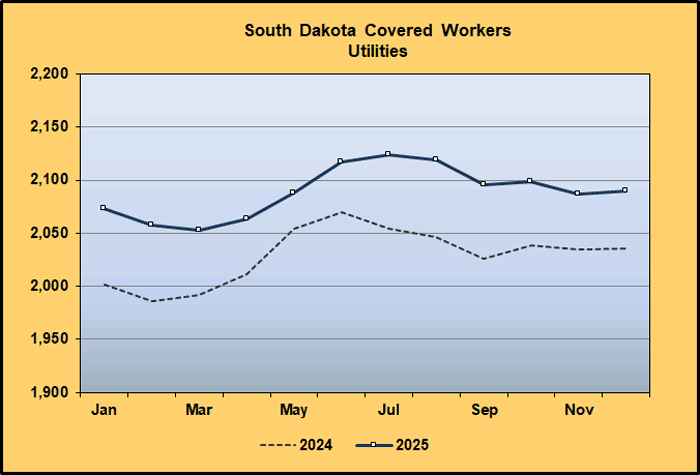
The Utilities sector includes one subsector Utilities (NAICS 221) at the three-digit NAICS organizational level. In 2025, the sector gained three establishments and 60 workers or 3.0%, totaling 179 establishments with 2,089 workers. The average annual pay was $111,948, an increase of $4,339 or 4.0%. This sector is among the highest paying industries, ranking second overall in annual wages, following only the Management of Companies and Enterprises sector.
The Utilities subsector includes:
- Electric Power Generation, Transmission and Distribution
- Natural Gas Distribution
- Water, Sewage and Other Systems
Establishments provide electric power, natural gas, steam supply, water supply, and sewage removal through permanent infrastructure of lines, mains, and pipes. Services vary by utility. Electric power encompasses transmission and distribution; natural gas includes distribution; steam supply involves distribution; water supply offers treatment and distribution; while sewage removal includes collection and disposal of waste. Waste management services are excluded, as they do not use sewer systems or sewage treatment facilities but handle waste collection and disposal separately.
This sector ranks high in annual wages but low in the number of establishment and employment. The critical services provided by this sector are demonstrated by its high wage ranking. South Dakota’s population has been growing in recent years, and employment needs within the Utilities sector are expected to increase accordingly to support the demands of residents and businesses. According to the Census Bureau, South Dakota’s population increased by 48,438 residents or 5.5% from April of 2020 to July of 2025. Establishments that provide water, gas, and power are directly impacted by population growth.